You Bank Across 3 Apps. None of Them Know the Real You.
You don't have one financial home anymore, you have several. And you're the only one who knows the whole story.
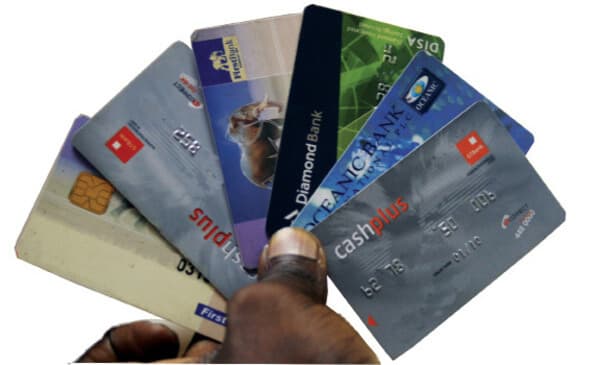
You have an account where your salary comes in. Another one where you save. Another one you use because transfers are easier. Maybe you have a fourth for your business. Or a wallet you use for everyday payments.
Nothing is wrong with that. In fact, for many Nigerians, this is simply how money works now.
You don't have one financial home. You have several.
And each one knows a little about you.
The strange part is that you are the only one who knows the whole story.
Your salary account knows your salary
Imagine your salary comes into Access Bank. Every month, the money arrives. Your employer is consistent. Your income is relatively stable.
You pay your rent. You pay your bills. You send money to family. You save. You spend.
But your salary account doesn't necessarily know what happens to your money after it leaves.
- Your savings account sees some of it.
- Your other bank sees some of it.
- Your investment platform sees some of it.
- Your landlord sees another part.
- Your credit provider sees another.
You see one financial life. They see separate accounts.
Your savings app knows you save
Perhaps you use Kuda for savings. You regularly move money there. You have built a decent balance. You rarely touch it.
That tells an important story. It suggests something about your ability to set money aside and maintain a financial cushion.
But your salary bank may not see it. And the lender reviewing your salary account may have no idea the savings exist unless you provide additional evidence.
Again, nobody is necessarily doing anything wrong. The system is simply looking through a narrow window.
Your business account knows your business
Now imagine you run a small business. Customers pay you through transfers. Some pay through POS. Some pay cash. You use one account for suppliers and another for personal expenses.
Your business might be doing well. But if someone asks you to prove your business revenue, you may suddenly have to reconstruct the story manually.
- Print this statement.
- Download that statement.
- Explain this transfer.
- Show another account.
- Provide another document.
The money is there. The evidence is there. But the picture is scattered.
This is what fragmentation feels like
Financial fragmentation doesn't necessarily feel like a technical problem. It feels like:
“Please send six months of statements.”
“Which account receives your salary?”
“Do you have another account?”
“What about your savings?”
“Can you provide proof of this income?”
“Can you explain these transactions?”
None of these questions are unreasonable on their own. But together, they reveal something: the institution is trying to reconstruct a financial life that already exists.
You are not a collection of bank accounts
This is the fundamental problem.
A bank account is an account. A wallet is a wallet. A credit report is a credit report. A POS terminal is a payment channel. None of them is you. They are records of different parts of your financial life.
But when you need to prove yourself financially, those pieces suddenly have to become a coherent story. And most of the time, you are the one expected to connect them.
What gets lost in the gaps?
A lot.
- A lender looking at one account may not see your savings elsewhere.
- Someone assessing your income may not see your other legitimate income sources.
- A business financier looking at one statement may not see the revenue flowing through your POS.
- A landlord asking for a payslip may not see that your freelance income has been consistent for years.
- A financial institution looking at a credit report may see your credit history without seeing the broader financial behaviour around it.
The problem isn't necessarily a lack of data. It is a lack of connected context.
This is why “financial identity” matters
Financial identity is not a fancy name for a bank account. It is the broader picture of your financial life.
- Your income.
- Your spending.
- Your savings.
- Your liquidity.
- Your repayment behaviour.
- Your financial patterns over time.
- Your credit history where available.
The things that, together, tell a more complete story about how you manage money.
You already have this identity. It exists whether or not anyone has given it a name.
CredMe brings the pieces together
This is what CredMe is designed to do. With your permission, CredMe connects to your eligible financial accounts using read-only access. It brings the information together. Then it looks at the patterns behind the transactions.
Not simply: ₦200,000 entered the account.
But: where does income come from? How consistent is it? How much liquidity is available? How is money being managed? What does repayment behaviour look like?
The goal is to turn scattered financial information into something you can actually understand and use which is your Financial Identity. And from that identity comes your CredMe Score.
One person. One financial picture.
Imagine opening CredMe and seeing the pieces of your financial life represented together.
Not three separate apps. Not five different statements. Not a folder full of PDFs.
One financial picture.
You can see where you stand. You can understand what is strengthening your profile. You can see what may be affecting it. And when you need to prove something about your finances, you have a clearer foundation to work from.
This isn't about closing your other accounts
You don't need to choose one bank. You don't need to stop using your favourite fintech. You don't need to move your money into CredMe.
CredMe isn't trying to replace your financial providers. We're trying to connect the story between them.
Your bank remains your bank. Your savings platform remains your savings platform. Your payment provider remains your payment provider. CredMe sits above those fragments to help turn them into a more complete financial identity.
The future is not fewer financial accounts
People will continue to use different banks and financial platforms for different reasons. That's not necessarily the problem.
The problem is that your financial identity shouldn't become more fragmented every time you open another useful financial product. You should be able to have multiple financial relationships without having to rebuild your financial story from scratch every time you need to prove yourself.
Your financial life is already connected
Your salary pays your rent. Your business revenue pays your suppliers. Your savings protect you from emergencies. Your spending reflects your habits. Your repayments build your history.
These aren't separate stories. They're chapters of the same one.
CredMe is building the layer that brings those chapters together because the world shouldn't have to meet you one bank account at a time.
Your money has a story. CredMe helps make the whole story visible.
About CredMe
CredMe is building a financial identity layer that brings real financial data and behaviour together to help people understand and prove their financial position. Your Financial Identity. Your CredMe Score. More visibility into the opportunities ahead. Built in Nigeria.
Join the waitlist